
Heat Transfer Applications: An Engineering Reference Guide

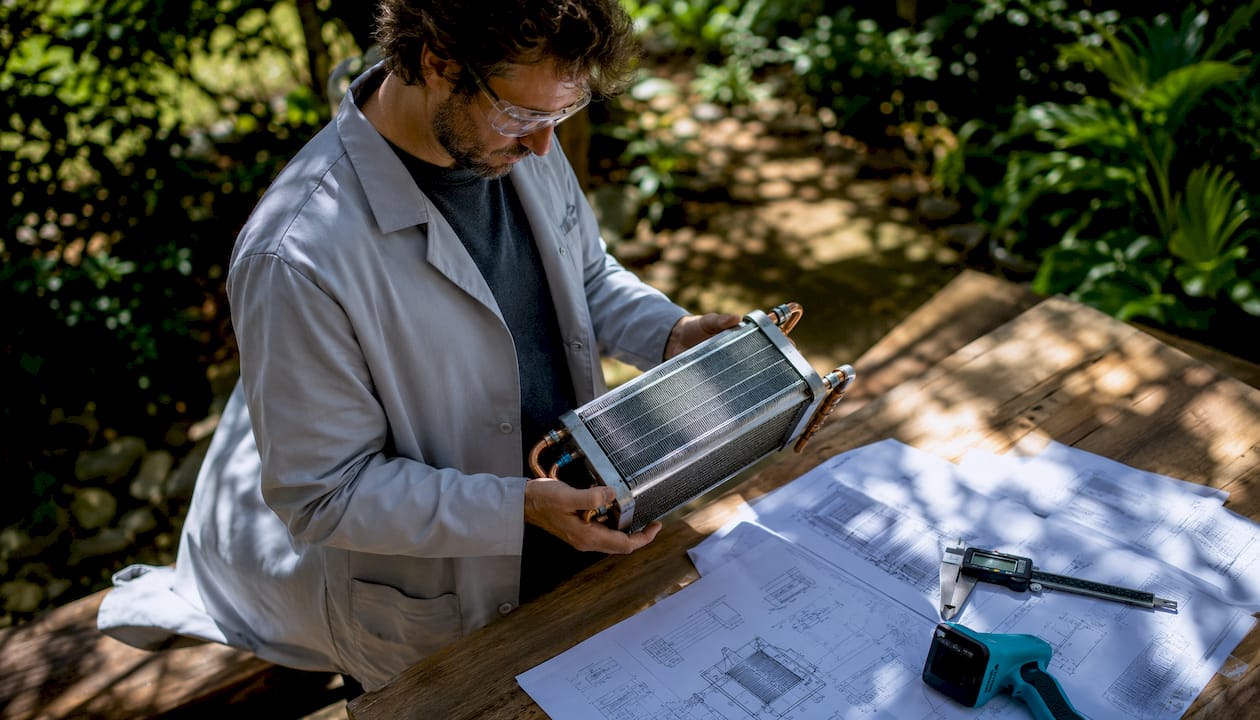
Heat transfer applications are the practical implementations of thermal energy exchange across systems, materials, and processes. Every time engineers design a cooling system for a microprocessor, size a shell-and-tube heat exchanger for a refinery, or specify insulation for a cryogenic pipeline, they are working within this domain. The three fundamental mechanisms are conduction, convection, radiation, and phase change, and in most real systems, two or more of these operate simultaneously.
The industries where thermal management is not just useful but mission-critical include:
Electronics cooling: CPUs, power electronics, and LED arrays generate intense localized heat that must be removed to prevent failure.
HVAC systems: Forced-air furnaces, chillers, and heat pumps rely on convection and phase change to condition building environments.
Power generation: Boilers, condensers, and cooling towers in nuclear and fossil-fuel plants are essentially large-scale heat exchange technologies.
Chemical and process industries: Reactors, distillation columns, and heat recovery units depend on precise thermal control.
Biomedical engineering: Hyperthermia cancer treatment, blood oxygenators, and surgical ablation tools all exploit controlled heat transfer.
Renewable energy: Solar thermal collectors, geothermal systems, and thermal energy storage units balance supply and demand through deliberate heat exchange.
Industrial labeling and printing: Thermal transfer printing uses a heated ribbon to melt ink onto substrates, producing durable barcodes and labels for medical, automotive, and retail applications.
Understanding where and how heat moves is the starting point for every thermal design decision an engineer makes.
Table of Contents
How heat transfer mechanisms work in real engineering systems
The three mechanisms of heat transfer each have distinct physics, but they rarely operate in isolation. A boiler, for instance, involves conduction through tube walls, forced convection on the water side, and radiation from the combustion flame, all at once. Getting the design right means understanding each mode well enough to know which one dominates and where.
Conduction
Conduction is heat flow through a solid or stationary fluid driven by a temperature gradient. The governing equation is Fourier’s law: heat flux equals thermal conductivity multiplied by the temperature gradient. In practice, this means:
A copper heat spreader on a power amplifier moves heat laterally because copper’s thermal conductivity (~385 W/m·K) is roughly 800 times higher than that of still air.
Boiler tube walls conduct heat from combustion gases to the working fluid; wall thickness and material selection directly set the thermal resistance.
Printed circuit board (PCB) substrates conduct heat from component junction to board edge, where convection takes over.
The key engineering lever in conduction is material selection combined with geometry. Thinner walls and higher-conductivity materials reduce thermal resistance, but structural and corrosion constraints set the floor.
Convection
Convection transfers heat through bulk fluid motion. Natural convection is driven by buoyancy differences caused by density gradients; forced convection uses fans, pumps, or blowers to move fluid deliberately. Industrial systems like cooling towers, HVAC airflows, and shell-and-tube exchangers all rely on convection as the primary heat transfer mode on at least one fluid side.
Forced convection in a data center’s cold-aisle/hot-aisle arrangement moves chilled air across server racks at controlled velocities, keeping junction temperatures within spec.
Natural convection governs heat loss from uninsulated pipes and the thermal stratification inside large storage tanks.
Mixed convection appears when forced and buoyancy-driven flows are comparable in magnitude, a condition common in low-flow HVAC ducts.
The convective heat transfer coefficient (h) is the central design parameter. It depends on fluid properties, flow velocity, and geometry, and it spans roughly 5–25 W/m²·K for natural air convection up to tens of thousands for boiling water.
Radiation
Radiation transfers energy via electromagnetic waves and requires no medium. The Stefan-Boltzmann law governs the power emitted by a surface: power equals emissivity times the Stefan-Boltzmann constant times the fourth power of absolute temperature. That T⁴ dependence means radiation becomes dominant at high temperatures.
Furnace walls radiate to metal workpieces in steel heat treatment.
The greenhouse effect is a radiation phenomenon: atmospheric gases absorb infrared radiation re-emitted by Earth’s surface and re-radiate a portion back downward.
Spacecraft thermal control relies almost entirely on radiation because there is no convective medium in orbit.
Emissivity is the key material property here. A polished aluminum surface has an emissivity near 0.05; a blackbody surface approaches 1.0. Selective coatings on solar collectors exploit this by maximizing solar absorptance while minimizing infrared emittance.
Phase change heat transfer
Phase change, specifically boiling and condensation, transfers enormous amounts of energy at nearly constant temperature. The latent heat of vaporization for water is approximately 2,257 kJ/kg, which is why steam systems can move far more energy per unit mass than single-phase liquid systems.
Nucleate boiling occurs when discrete bubbles form at heated surfaces. It is the preferred operating regime in steam generators because heat transfer coefficients are high and surface temperatures remain moderate.
Film condensation forms a continuous liquid layer on a cooled surface. Dropwise condensation, where liquid beads up and rolls off, yields heat transfer coefficients three to ten times higher but is harder to sustain in practice.
Evaporative cooling removes heat through the latent heat of vaporization. Cooling towers use this principle to reject heat from industrial processes and power plants to the atmosphere.
12 key heat transfer applications engineers need to understand
1. Electronics thermal management with heat sinks and heat pipes
Semiconductor devices fail when junction temperatures exceed their rated limits, so thermal management in electronics is a hard constraint, not a design preference. Heat sinks use extended surfaces (fins) to increase the convective area between a component and the surrounding air. Aluminum extruded fins are standard for moderate power densities; copper vapor chambers and heat pipes handle higher fluxes by exploiting two-phase flow internally.
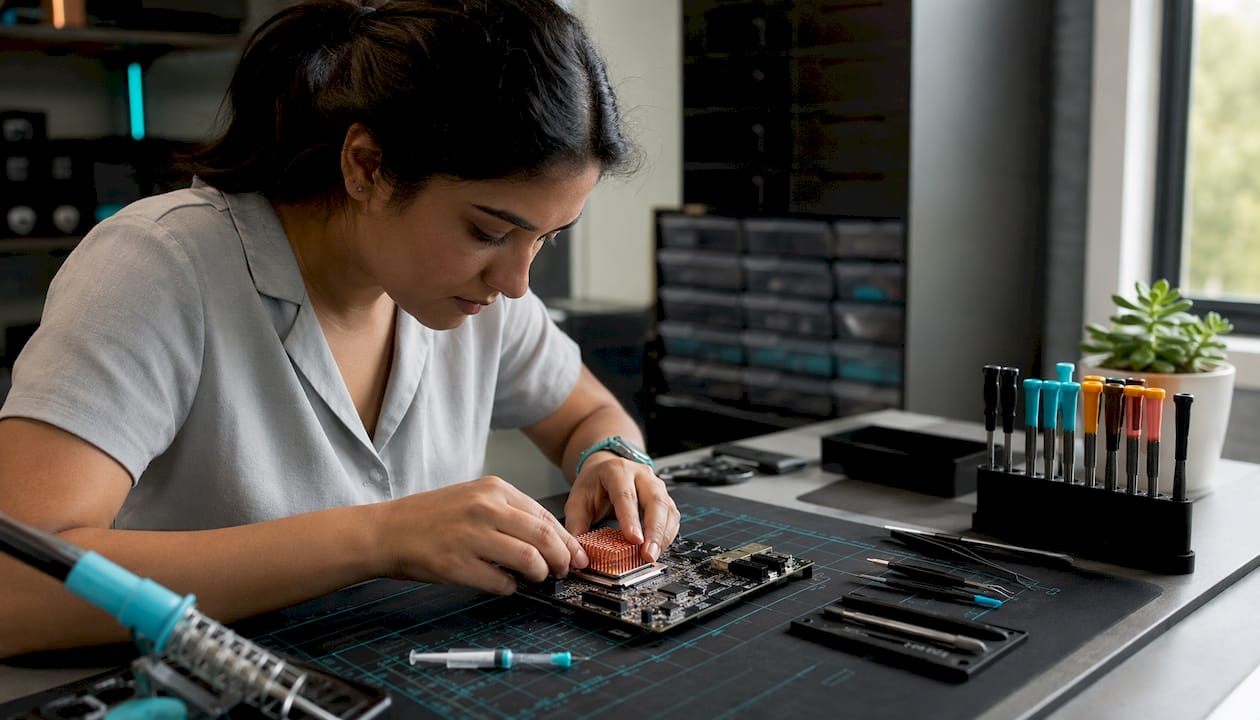
A heat pipe is a sealed tube containing a working fluid. Heat applied at the evaporator end vaporizes the fluid; vapor travels to the condenser end, releases latent heat, and the condensate wicks back via a porous lining. This passive mechanism can achieve effective thermal conductivities orders of magnitude higher than solid copper, making heat pipes indispensable in laptop cooling modules and high-power LED fixtures.
Pro Tip: When selecting a heat sink, the thermal interface material (TIM) between the component and the heat sink base often contributes more resistance than the fin geometry itself. A low-conductivity TIM can negate the benefit of an expensive copper heat sink.
2. Shell-and-tube heat exchangers in power and chemical plants
Shell-and-tube heat exchangers are the workhorses of industrial heat exchange technologies. One fluid flows through a bundle of tubes; the other flows across the shell side, often directed by baffles to increase turbulence and improve the convective coefficient. They handle high pressures and temperatures that plate-type exchangers cannot, which is why they dominate in refineries, petrochemical plants, and steam power cycles.
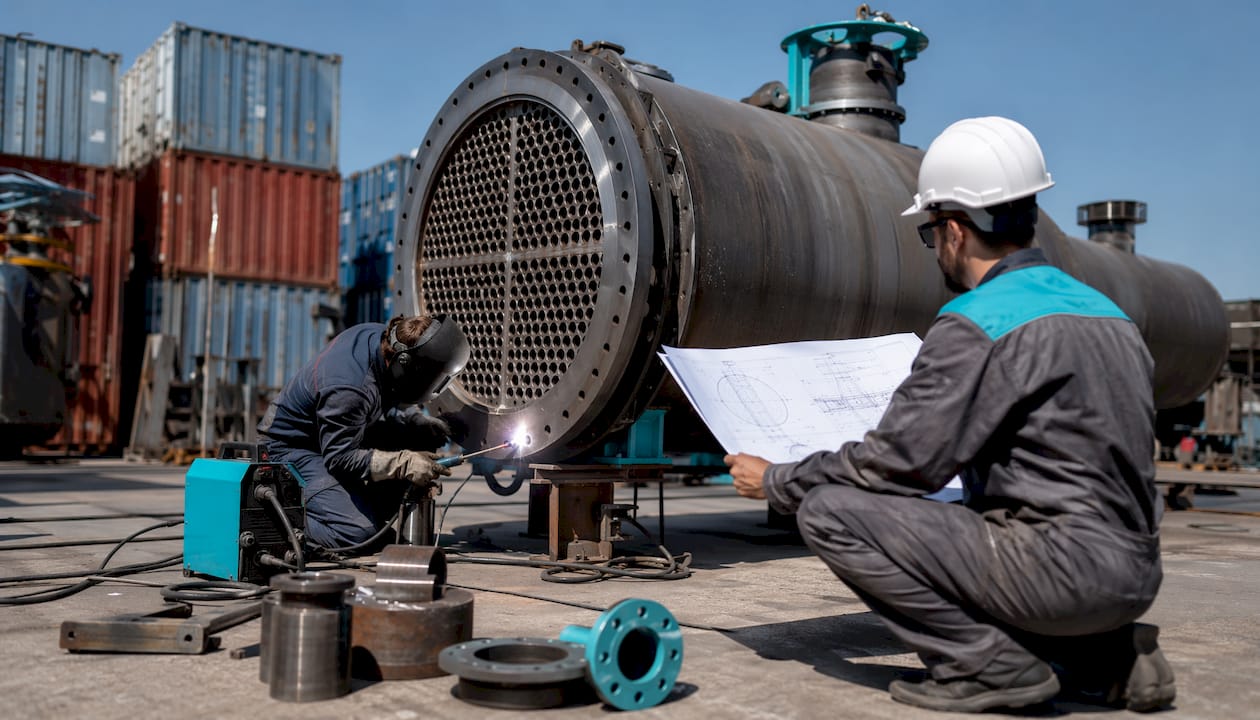
The TEMA (Tubular Exchanger Manufacturers Association) standards govern design classifications. A Type E single-pass shell is the simplest configuration; multi-pass arrangements increase the effective temperature difference and heat transfer area without increasing the footprint. Fouling factors, which account for scale and deposit buildup on tube surfaces, are a critical design input because they degrade performance over time and drive maintenance schedules.
3. Boilers and steam generation
A boiler converts liquid water to steam by applying heat from combustion, nuclear fission, or electric resistance. The heat transfer inside a fire-tube boiler flows by convection and radiation from hot combustion gases through tube walls by conduction and then into the surrounding water by convection and nucleate boiling. Water-tube boilers reverse the arrangement: water flows inside tubes surrounded by combustion gases, allowing higher pressures and steam outputs.
Boiler performance depends heavily on water quality and scale deposition. A calcium carbonate scale layer just 1 mm thick on a boiler tube surface can reduce heat transfer efficiency significantly because calcium carbonate’s thermal conductivity is roughly 100 times lower than that of steel.
4. HVAC systems and building thermal control
Heating, ventilation, and air conditioning systems are among the most widespread applications of thermal transfer in engineering. A split-system air conditioner uses a refrigerant cycle: the evaporator coil absorbs heat from indoor air by evaporating refrigerant (phase change plus convection), and the condenser coil rejects that heat to outdoor air by condensing the refrigerant. The compressor raises refrigerant pressure and temperature to make the outdoor rejection thermodynamically possible.
Variable refrigerant flow (VRF) systems extend this principle to multi-zone buildings, modulating refrigerant flow to individual air handling units based on zone demand. Energy recovery ventilators (ERVs) add another layer by using a heat exchanger to pre-condition incoming fresh air with the exhaust stream, recovering thermal energy that would otherwise be wasted.
5. Cooling towers in industrial processes
Cooling towers reject heat from industrial processes and power plants to the atmosphere, primarily through evaporative cooling. Hot water from a condenser or process heat exchanger is distributed over fill media, where it contacts a stream of ambient air. A fraction of the water evaporates, absorbing latent heat and cooling the remaining liquid. The cooled water returns to the process.
Wet cooling towers can cool water to within a few degrees of the ambient wet-bulb temperature, which is why they are far more effective in dry climates than in humid ones. Drift eliminators prevent water droplets from escaping with the exhaust air, reducing water loss and chemical discharge to the environment.
6. Heat transfer in the human body and bioheat applications
The human body is a sophisticated thermal management system. Core temperature is maintained near 37°C through a combination of metabolic heat generation, blood perfusion (convection), conduction through tissues, and evaporative cooling via sweat. Skin acts as a variable-conductance thermal interface: blood vessels dilate to increase heat loss or constrict to conserve it.
In medical engineering, bioheat transfer is central to hyperthermia cancer treatment, where tumor tissue is deliberately heated to temperatures that cause cell death while keeping surrounding healthy tissue below 43°C to prevent collateral damage. Mathematical models based on the Pennes bioheat equation simulate blood perfusion and heat transport in tissues, allowing clinicians to plan treatment parameters with precision. Surgical ablation tools, cryotherapy probes, and blood oxygenators all depend on the same underlying bioheat physics.
7. Thermal energy storage for renewable energy systems
Renewable energy sources like solar and wind are intermittent, so thermal energy storage is a key technology for balancing production and demand. Sensible heat storage systems raise or lower the temperature of a storage medium (water, molten salt, or rock) to store energy. Latent heat storage uses phase change materials (PCMs) that absorb or release large amounts of energy at a nearly constant temperature during melting or solidification.
Concentrated solar power (CSP) plants use molten salt at temperatures above 500°C as both a heat transfer fluid and a storage medium. The stored thermal energy can generate steam and drive a turbine hours after the sun has set, effectively decoupling electricity generation from solar irradiance. Residential applications include PCM-enhanced building materials that absorb daytime solar heat and release it at night, reducing heating loads.
8. Thermal insulation in industrial and building systems
Insulation is not passive; it is an active thermal management tool that controls the rate of heat transfer by introducing high-resistance materials into the heat flow path. Mineral wool, polyisocyanurate foam, and aerogel blankets each offer different combinations of thermal conductivity, temperature rating, and mechanical properties.
In cryogenic applications, multi-layer insulation (MLI) consisting of alternating layers of aluminized Mylar and low-conductivity spacers reduces radiation and conduction losses to levels that allow liquid nitrogen or liquid hydrogen to be stored for extended periods. Pipeline insulation in district heating systems must balance heat retention against condensation risk on the outer surface, a calculation that depends on the local climate and soil thermal properties.
9. Phase change applications: boiling, condensation, and evaporative cooling
Beyond boilers and HVAC, phase change heat transfer appears in a wide range of specialized applications. Thermosyphons in permafrost regions use two-phase convection to extract heat from the ground and reject it to cold winter air, keeping the ground frozen beneath infrastructure like pipelines and building foundations. Spray cooling systems in power electronics use fine droplets of dielectric fluid that evaporate on contact with hot surfaces, achieving very high heat fluxes in compact packages.
Condensation on the outer surface of chilled water pipes in humid environments is a heat transfer phenomenon that building engineers must account for. If the pipe surface temperature drops below the dew point of the surrounding air, condensation forms, potentially causing corrosion and ceiling damage. Vapor barriers and insulation thickness are sized to keep the outer surface above the dew point under design conditions.
10. Industrial thermal transfer printing and labeling
Thermal transfer printing is a direct application of controlled conductive heat transfer at the micro-scale. A printhead element heats a wax or resin ribbon, melting ink onto a substrate in precise dot patterns. The result is a durable, high-resolution label resistant to heat, abrasion, and chemicals, which is why thermal transfer ribbons are standard in medical device labeling, automotive part marking, and retail barcoding.
Digital Thermal Transfer Overprinting (TTO) has largely replaced analog hot-stamp coding in flexible packaging lines. TTO printers deliver high resolution with short warm-up times and allow real-time changes to print content without mechanical adjustments, reducing line downtime significantly. Ribbon composition matters: wax ribbons suit paper substrates, wax-resin blends handle semi-gloss and coated materials, and full resin ribbons are specified for polypropylene and polyester where chemical resistance is required.
Ribbon Type | Substrate Compatibility | Durability Level | Typical Application |
Wax | Paper, cardboard | Moderate | Retail shelf labels |
Wax-Resin | Coated, semi-gloss | High | Logistics, shipping labels |
Full Resin | Polypropylene, polyester | Very high | Medical devices, automotive parts |
Pro Tip: Ribbon tension and printhead pressure are the two most commonly overlooked calibration parameters in thermal transfer printing. Incorrect settings cause faded prints, barcode scan failures, and accelerated printhead wear. Calibrate both at the start of each ribbon roll change.
11. Heat transfer enhancement technologies
When standard geometries and materials cannot meet heat transfer requirements, engineers turn to enhancement techniques. These fall into two categories: passive (no external power input) and active (requiring power).
Passive enhancements: Corrugated or finned surfaces increase the convective area. Twisted tape inserts promote turbulence inside tubes. Micro-channel heat exchangers achieve very high surface-area-to-volume ratios, critical in aerospace and power electronics.
Active enhancements: Ultrasonic vibration disrupts the thermal boundary layer on heat transfer surfaces. Electrohydrodynamic (EHD) pumping uses electric fields to move dielectric fluids without mechanical pumps. Jet impingement cooling directs high-velocity fluid jets at hot surfaces, achieving local heat transfer coefficients far above those of channel flow.
Additive manufacturing has opened new possibilities for passive enhancement. Lattice structures and topology-optimized internal geometries that would be impossible to machine can now be printed in aluminum or titanium, enabling heat exchangers with surface areas and flow paths tailored precisely to the thermal load.
12. Thermal management in aerospace and defense systems
Aerospace thermal management operates under constraints that ground-based engineers rarely face: extreme temperature swings, vacuum environments, weight limits, and no possibility of maintenance. Aircraft engine turbine blades operate in gas streams exceeding 1,400°C, well above the melting point of the nickel superalloys they are made from. They survive because of internal convective cooling channels, thermal barrier coatings (TBCs) of yttria-stabilized zirconia, and film cooling holes that create a protective layer of cooler air on the blade surface.
Satellite thermal control uses a combination of radiation (the only available mechanism in orbit), heat pipes, and thermoelectric coolers to maintain instrument temperatures within narrow bands despite cycling between sunlit and eclipse conditions. The design of a satellite’s thermal control system often determines the mission’s operational lifetime.
How thermal simulation software transforms heat transfer analysis
Physics-based simulation has become the standard approach for analyzing complex heat transfer systems because analytical solutions exist only for idealized geometries. Real components have irregular shapes, temperature-dependent material properties, and multiple simultaneous heat transfer modes that make closed-form solutions impractical.
Modern thermal simulation tools address this by discretizing the problem domain into finite elements or finite volumes and solving the governing equations numerically. The key capabilities that distinguish a useful tool from a basic one include:
Variable material properties: Thermal conductivity, specific heat, and density all change with temperature. A simulation that uses fixed room-temperature values for a system operating at 600°C will produce significant errors.
Multi-mode heat transfer: Conduction, convection, and radiation must be solved simultaneously in most real applications. Tools that handle only one mode require manual coupling, which introduces error.
Wide temperature range: Applications span cryogenic storage (below -196°C) to combustion systems (above 1,500°C). The solver must remain numerically stable across this range.
CFD integration: Fluid flow and heat transfer are coupled. A CFD module computes velocity fields that feed directly into the convective heat transfer calculation.
Pressure vessel design: Many thermal systems operate under pressure. Integrated structural analysis ensures that thermal stresses do not compromise mechanical integrity.
Built-in property database: Access to validated thermophysical properties for common engineering materials eliminates a major source of input error.
A holistic understanding of heat transfer requires balancing heat removal, storage, and material resistance. Physics-based simulations are the most reliable way to achieve that balance in systems where analytical methods fall short, because they capture the interactions between modes that simplified hand calculations cannot.
Jewlztech’s Thermalysis Toolkit is built around exactly these requirements. It handles conduction, convection, and radiation analysis with variable material properties across a wide temperature range, includes a built-in property database, and is available as a downloadable Excel-based tool that integrates into engineering workflows without requiring a dedicated simulation workstation. For engineers who need CFD and pressure vessel analysis alongside thermal modeling, the toolkit covers those modules as well.
Pro Tip: Before running a full simulation, validate your model against a known analytical solution or experimental data for a simplified version of your geometry. This catches mesh errors, boundary condition mistakes, and material property inputs before they propagate into a complex, hard-to-debug result.
The practical value of simulation shows up most clearly in design iteration. A thermal engineer sizing a heat exchanger for a new process plant can test dozens of baffle configurations, tube counts, and fluid velocities in hours rather than weeks of physical prototyping. When the design space includes phase change, radiation, or non-Newtonian fluids, simulation is not just faster than physical testing. It is the only feasible approach for understanding the full system behavior before committing to fabrication.
For engineers building their foundation in these methods, Jewlztech’s engineering heat transfer guide covers the practical application of simulation principles across conduction, convection, and radiation scenarios.

Key Takeaways
Heat transfer applications span every major engineering discipline, and the ability to model all three mechanisms simultaneously, with accurate material properties, is what separates reliable thermal designs from ones that fail in service.
Point | Details |
Phase change dominates energy density | Boiling and condensation transfer far more energy per unit mass than single-phase flow, making them central to power generation and cooling systems. |
Bioheat models enable precision medicine | Hyperthermia treatment targets tumor destruction while keeping surrounding tissue below 43°C, guided by Pennes bioheat equation simulations. |
Ribbon type determines label durability | Full resin ribbons are required for polypropylene and polyester substrates in medical and automotive labeling; wax ribbons suit paper only. |
Simulation requires variable properties | Fixed room-temperature material values produce significant errors in systems operating at elevated or cryogenic temperatures. |
Enhancement techniques extend design limits | Micro-channels, jet impingement, and additive-manufactured lattice structures achieve heat fluxes that standard fin-and-fan geometries cannot reach. |
Recommended
Comments